 Transacting at the speed of light
Why Payment Infrastructure is the Foundation of the Future of Financial Services in Africa
Africa Is Building More Than a Payments System
The most important financial decisions being made in Africa today are not about products. They are about foundations.
Africa is not building a payment system. It is building the financial nervous system of one of the world’s fastest-growing economic regions, and the infrastructure decisions made today will determine who leads that system for the next generation. Most conversations about African financial services focus on the visible layer: mobile wallets, lending platforms, remittance applications, and digital banking experiences. Progress is often measured through customer acquisition, transaction volumes, or the speed of a single transfer.
But the real determinant of long-term market leadership sits beneath all of that. The institutions that will define the next decade of African financial services will not necessarily be the ones building the most visible products today. They will be the institutions that treat infrastructure as a strategic priority, not an operational afterthought.
That distinction between the application layer and the infrastructure layer is not a technical nuance. It is one of the most consequential strategic questions facing financial institutions, enterprises, and policymakers across the continent.
Africa’s Financial Growth Is Stress-Testing Infrastructure
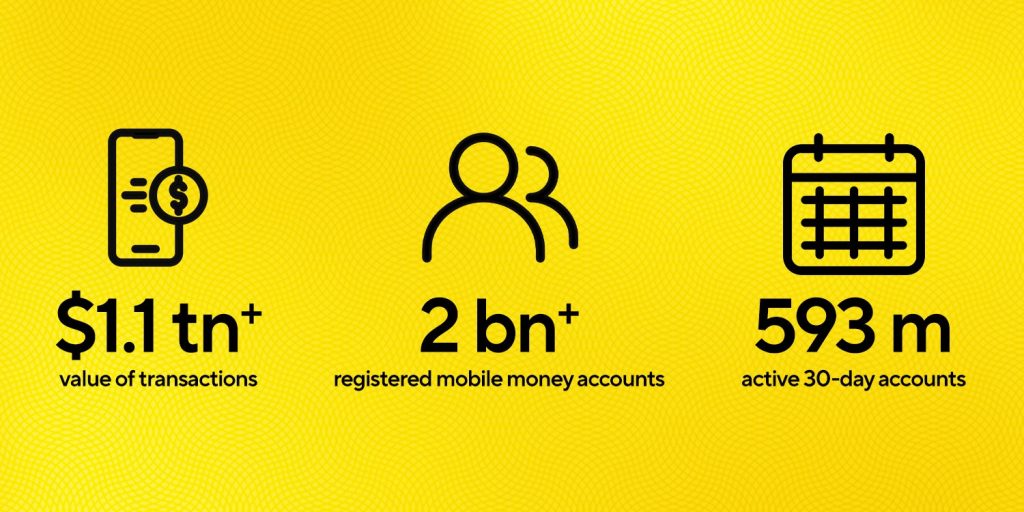
Across Africa, digital financial adoption continues to accelerate. According to the GSMA’s 2025 State of the Industry Report on Mobile Money, the industry surpassed two billion registered accounts and over 500 million active monthly users globally in 2024, with Sub-Saharan Africa remaining the world’s most active mobile money region. Africa alone processed 65% of global mobile money transaction value that year, accounting for over $1.1 trillion across nearly 82 billion transactions. according to Ecofin Agency.
Digital lending platforms are widening access to credit in markets where traditional financial systems remain limited. Cross-border payment corridors that once required days and significant fees are now settling in minutes.
The narrative of African financial innovation is compelling because it is real. Yet beneath that growth story is a structural challenge that deserves far greater executive attention. Much of the infrastructure supporting digital financial services across Africa was not originally designed for the scale, interoperability, or regulatory complexity the market now demands.
Many institutions are operating across fragmented systems while trying to scale across multiple jurisdictions. They are simultaneously managing evolving compliance requirements and maintaining transaction performance under increasing volume pressure. When a payment fails, customers do not blame infrastructure fragmentation. They blame the institution. When settlement delays disrupt operations, finance leaders do not think about network architecture. They think about liquidity exposure and operational risk. When transaction systems experience downtime during peak periods, boards do not first ask technical questions. They ask about reputational impact, customer trust, and regulatory consequences.
In every scenario, the infrastructure layer ultimately determines the outcome.
Why Infrastructure Is Becoming the Real Competitive Advantage
Here is the reality the industry must confront: the competitive advantage of the next decade will not be won primarily at the application layer. It will be won at the infrastructure layer.
Infrastructure is no longer just a back-office technology concern. It is the strategic foundation that determines what an institution can build, how quickly it can scale, how reliably it can operate, and how effectively it can expand across markets. Every product an institution launches is ultimately constrained or enabled by the foundational systems beneath it.
An institution may launch an innovative customer-facing solution, but innovation eventually stalls if the underlying infrastructure cannot support growth, maintain uptime, integrate across markets, or adapt to regulatory change.
This principle has already shaped leadership in mature financial markets globally. The institutions that sustained long-term dominance did not succeed only because of customer-facing innovation. They succeeded because they secured infrastructure advantages that competitors could not easily replicate.
Africa’s infrastructure moment is unfolding under compressed timelines. Unlike mature markets where foundational systems evolved gradually over decades, African financial institutions are scaling while simultaneously building critical financial rails in real time.
That reality makes every infrastructure decision made today more consequential than it would be in any other market context.
The Hidden Cost of Delayed Infrastructure Investment
One reason infrastructure conversations often receive less executive attention is that infrastructure remains largely invisible when it works.
Boards naturally focus on growth metrics, market expansion, customer acquisition, and revenue performance. The foundational systems enabling those outcomes rarely receive the same level of strategic visibility. This creates a compounding problem. While the challenge spans all infrastructure categories, its effect on financial services is particularly acute.
The African Development Bank reports that Africa currently invests only 4% of its GDP in infrastructure, compared with 14% in China, and that closing this gap could increase annual GDP growth by an estimated two percentage points.
In the context of payment infrastructure specifically, the consequences of underinvestment are not measured in aggregate GDP figures. They are measured in failed transactions, interrupted settlement cycles, security vulnerabilities, and the quiet erosion of institutional trust that accumulates every time a system does not perform as promised.
When infrastructure is treated primarily as an operational necessity rather than a strategic priority, investment is often deferred in favour of product development, distribution, and short-term growth initiatives. The weaknesses only become visible when transaction volumes increase sharply, when institutions expand into additional markets with more complex compliance requirements, or when customers begin comparing service reliability across competitors.
By the time those limitations become visible externally, the cost of addressing them is multiple of what proactive investment would have required.
Institutions are then forced to modernize systems while simultaneously managing growth, customer expectations, operational continuity, and regulatory relationships under pressure. That is the most expensive and most disruptive stage at which to build infrastructure, yet it remains one of the most common patterns across the industry.
The Strategic Questions Leaders Must Ask

For CEOs and managing directors of financial institutions operating across Africa, the strategic question is straightforward: where is your organisation placing its most important long-term investments?
If investment is concentrated primarily at the application and distribution layer while infrastructure is treated as a stable operational foundation requiring only maintenance, then the institution will eventually face a point where customer demand, transaction volume, and market complexity outpace what its systems can reliably support.
For CTOs and CIOs, the question is equally critical: is the infrastructure your institution currently operates genuinely built for the scale, regulatory complexity, and cross-border interoperability requirements of the markets you intend to serve?
Or: has the organisation gradually extended and adapted systems beyond the conditions they were originally designed to support?
These are not comfortable questions. They are necessary ones.
The institutions willing to evaluate their infrastructure foundations honestly and act on what that evaluation reveals will be best positioned to lead as African financial markets continue to mature.
The Institutions That Lead Will Be the Ones That Prepare Early
Africa’s financial services industry is approaching a defining infrastructure moment.
The decisions financial institutions, infrastructure providers, regulators, and policymakers make today will shape the architecture of the continent’s financial ecosystem for a generation. That is not merely a technological conversation. It is a leadership one.
The African Development Bank estimates that closing the continent’s infrastructure investment gap could add two percentage points to annual GDP growth. For financial institutions specifically, the compounding returns of early infrastructure investment are not just economic. They are competitive. Every year an institution defers this decision is a year a better-prepared competitor uses to widen the gap.
The institutions that treat infrastructure as a strategic growth priority today will not be the ones making emergency infrastructure decisions tomorrow. That is not a prediction. Across every mature financial market in the world, it is already the pattern.
Africa’s financial leadership will be built on infrastructure. The only question is who is building it.